
Introduction
Modern vehicles rely on advanced lighting systems to improve visibility, safety, and driving confidence in various environments. While headlights remain the primary source of illumination, many drivers and vehicle manufacturers also utilize auxiliary lights to enhance visibility beyond the capabilities of standard lighting systems.
Whether navigating dark rural roads, operating heavy-duty machinery, driving through fog, or participating in off-road adventures, auxiliary lights provide additional illumination that helps drivers see farther, wider, and more clearly. As lighting technology continues to evolve, auxiliary lighting has become an essential component in automotive, commercial, agricultural, and industrial vehicles.
With more than 40 years of automotive lighting experience, SIRIUS Light Technology Co., Ltd. develops a wide range of vehicle lighting solutions for global OEM and ODM markets. From driving lights and fog lamps to projector lamps and off-road lighting systems, SIRIUS helps vehicle manufacturers and aftermarket brands deliver reliable lighting performance for demanding applications.
What Are Auxiliary Lights?
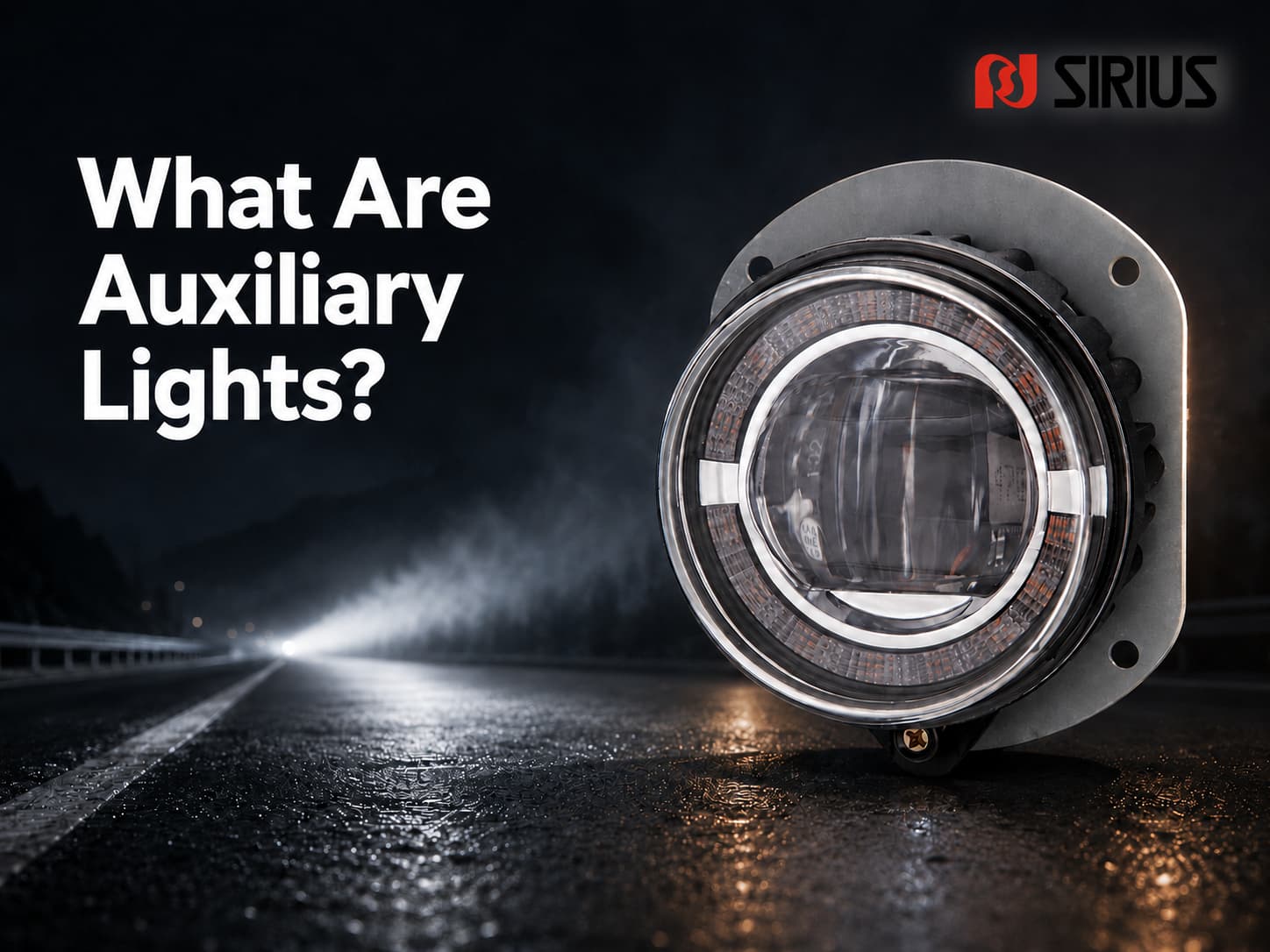
Auxiliary lights are supplemental vehicle lighting systems designed to provide additional illumination beyond standard headlights.
Unlike primary lighting systems, which are required by vehicle regulations, auxiliary lights are installed to improve visibility under specific driving conditions or operational environments.
These lights may help drivers:
- Increase forward visibility
- Improve peripheral awareness
- Enhance safety during adverse weather
- Illuminate work areas
- Support off-road driving
- Increase vehicle conspicuity
Auxiliary lights are commonly found on:
- Passenger vehicles
- Pickup trucks
- SUVs
- Off-road vehicles
- Agricultural machinery
- Construction equipment
- Commercial trucks
- Emergency vehicles
Why Are Auxiliary Lights Important?
Standard headlights are designed to meet general road-use requirements. However, certain environments demand additional lighting performance.
Improved Night-Time Visibility
Auxiliary lights can illuminate areas beyond the reach of standard low-beam headlights, allowing drivers to identify hazards earlier.
Better Performance in Challenging Weather
Fog, rain, snow, and dust can significantly reduce visibility. Specialized auxiliary lighting systems help improve contrast and road awareness in these conditions.
Enhanced Safety
Additional lighting can improve reaction times and reduce the risk of accidents by increasing visibility of road obstacles, pedestrians, and work zones.
Support for Specialized Applications
Many industries require lighting solutions beyond standard automotive systems. Construction sites, agricultural operations, and mining environments often depend on auxiliary lights for safe operation after dark.
Types of Auxiliary Lights
As a professional automotive lighting manufacturer, SIRIUS Light Technology Co., Ltd. offers a comprehensive range of auxiliary lighting solutions for passenger vehicles, commercial trucks, off-road vehicles, motorcycles, agricultural equipment, and specialty vehicles. The following are some of the most common auxiliary lighting products used in modern vehicle applications.
1. Fog Lamps
SIRIUS Fog Lamps are designed to improve visibility during adverse weather conditions such as:
- Fog
- Rain
- Snow
- Dust
Unlike standard headlights, fog lamps produce a low, wide beam pattern that minimizes reflection and glare.
Best Applications
- Daily driving
- Commercial vehicles
- Winter environments
2. Driving Lights
SIRIUS Driving Lights are designed to supplement high-beam headlights and provide additional long-range illumination.
These lights are especially useful when driving on:
- Rural roads
- Highways
- Remote areas
Driving lights help drivers detect hazards at greater distances.
Best Applications
- Pickup trucks
- SUVs
- Long-distance transportation
3. Spot Lamps
Spot lamps utilize a narrow beam pattern to project light over long distances.
Their concentrated beam makes them ideal for applications requiring extended visibility.
Best Applications
- Off-road vehicles
- Search and rescue operations
- Utility fleets
4. Projector Lamps
SIRIUS Projector Lamps utilize advanced optical lens technology to create highly controlled beam patterns.
Compared with conventional reflector systems, projector lamps often provide:
- Sharper beam cutoffs
- More focused illumination
- Improved glare control
Best Applications
- Premium vehicle lighting
- Specialty vehicle applications
5. Off-Road Lamps
Off-road lighting systems are designed for environments where conventional road lighting is unavailable.
These lights often provide:
- High lumen output
- Wide illumination coverage
- Rugged durability
Best Applications
- 4x4 vehicles
- Recreational off-road vehicles
- Adventure vehicles
6. Rally Lamps
SIRIUS Rally Lamps are engineered for high-performance applications where maximum visibility and durability are required.
Originally developed for motorsport applications, rally lamps deliver exceptional long-range illumination and reliability under demanding driving conditions.
Best Applications
- Rally racing
- Motorsport vehicles
- Extreme driving environments
7. Motorcycle Auxiliary Lights
SIRIUS Motorcycle Auxiliary Lights help riders improve both visibility and conspicuity during day and night operation.
Additional lighting can help riders:
- See further
- Be seen by other road users
- Improve safety during night riding
LED vs HID Auxiliary Lights
When selecting auxiliary lights, one of the most important considerations is lighting technology.
| Feature | LED Auxiliary Lights | HID Auxiliary Lights |
|---|---|---|
| Power Consumption | Low | Moderate |
| Brightness | High | Very High |
| Lifespan | 30,000–50,000 hrs | 2,000–5,000 hrs |
| Durability | Excellent | Good |
| Warm-Up Time | Instant | Requires warm-up |
| Maintenance | Low | Moderate |
Today, LED technology has become the dominant choice due to its efficiency, durability, and long service life.
How to Choose the Right Auxiliary Lights
Selecting the right auxiliary lights depends on several factors.
Vehicle Type
Different vehicles have different lighting requirements.
Examples include:
- Passenger cars
- Trucks
- Agricultural equipment
- Construction machinery
Driving Environment
The operating environment greatly influences lighting needs.
Examples:
- Highway driving
- Off-road terrain
- Foggy conditions
- Worksite operations
Beam Pattern
Common beam patterns include:
- Spot Beam
- Flood Beam
- Combo Beam
Each provides different visibility characteristics.
Regulatory Requirements
Vehicle lighting regulations vary by region.
Many professional buyers look for products that comply with:
- SAE Standards
- DOT Requirements
- E-Mark Certifications
Compliance helps ensure legal operation and consistent performance.
Why Optical Design Matters
Many buyers focus solely on lumen output when evaluating auxiliary lights.
However, brightness alone does not determine lighting performance.
Professional auxiliary lighting systems also require:
- Advanced reflector design
- Lens engineering
- Beam control
- Thermal management
- Electromagnetic compatibility (EMC)
At SIRIUS, product development focuses on delivering effective illumination rather than simply maximizing lumen ratings. Proper optical engineering ensures that light is directed where it is needed most.
FAQ
What are auxiliary lights used for?
Auxiliary lights provide additional illumination beyond standard headlights to improve visibility, safety, and operational performance.
Are auxiliary lights legal?
This depends on local vehicle regulations. Many regions require auxiliary lights to meet specific standards and installation requirements.
What is the difference between driving lights and fog lights?
Driving lights are designed for long-distance visibility, while fog lights provide low, wide illumination for adverse weather conditions.
Are LED auxiliary lights better than HID lights?
For most applications, LED auxiliary lights offer better durability, energy efficiency, and lifespan.
Which auxiliary lights are best for off-road vehicles?
Off-road vehicles often benefit from a combination of driving lights, spot lamps, flood beam lights, and off-road auxiliary lighting systems.
Conclusion
Auxiliary lights play a critical role in modern vehicle lighting systems. From improving visibility during adverse weather to supporting off-road adventures and commercial operations, these supplemental lighting solutions help drivers and operators work more safely and effectively.
As vehicle technology continues to advance, demand for high-performance auxiliary lighting systems continues to grow. Understanding the different types of auxiliary lights, beam patterns, and lighting technologies allows buyers to select solutions that best fit their specific applications.
Contact SIRIUS for Professional Auxiliary Lighting Solutions
With more than four decades of experience in automotive lighting, SIRIUS Light Technology Co., Ltd. provides professional OEM and ODM auxiliary lighting solutions for global markets. From fog lamps and driving lights to projector lamps, rally lamps, motorcycle auxiliary lights, and off-road lighting systems, SIRIUS develops reliable products that meet the demanding requirements of modern vehicles.
Whether you are an automotive brand, distributor, fleet operator, or vehicle equipment manufacturer, our team can help you develop lighting solutions tailored to your market needs. Contact SIRIUS today to learn more about our auxiliary lighting technologies and customized vehicle lighting solutions.