
2026.03.18
How to Choose the Right Work Lamp: LED vs Halogen vs HID Work Lights Explained
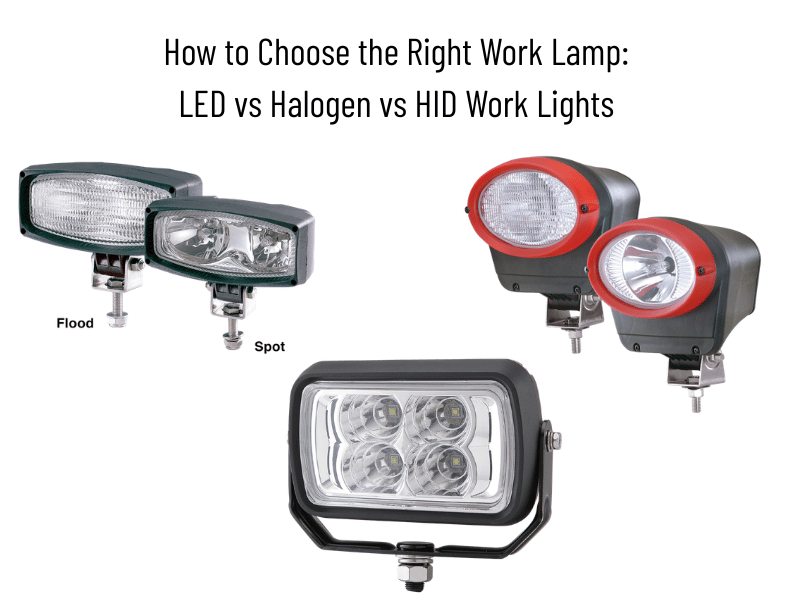
Introduction
Work lamps, also known as work lights, are essential lighting tools used across many industries. From construction sites and agricultural machinery to off-road vehicles and industrial maintenance, proper illumination is critical for ensuring safety, productivity, and operational efficiency. When working in low-light environments, a reliable work lamp allows operators to identify hazards, perform detailed tasks, and maintain visibility in challenging conditions.
As lighting technology continues to evolve, choosing the right work lamp has become more complex. Modern work lights are available in several lighting technologies, including LED, halogen, and HID. Each technology offers different advantages in brightness, durability, energy efficiency, and suitability for specific applications. Understanding these differences is the key to selecting the right lighting solution.
SIRIUS Light Technology Co., Ltd., established in 1983 in Tainan, Taiwan, has more than 40 years of experience in the automotive lighting industry. Over the decades, the company has developed strong expertise in optical engineering, lighting technology, and product manufacturing. SIRIUS designs and produces a wide range of lighting products including work lamps, auxiliary driving lights, head lamps, and specialty vehicle lighting systems. Through its professional OEM and ODM services, SIRIUS supports global automotive brands, fleet operators, and aftermarket lighting companies with high-performance lighting solutions designed for demanding environments.
Understanding the Three Major Work Lamp Technologies
When selecting a work lamp, one of the most important considerations is the lighting technology used inside the lamp. The three most common technologies used in work lights are LED, halogen, and HID lighting systems. Each technology has unique characteristics that determine its suitability for different applications.
1. LED Work Lights: The Modern Standard
LED (Light Emitting Diode) technology has become the most widely used lighting solution in modern work lamps. Compared with traditional lighting technologies, LED work lights offer several advantages that make them ideal for both automotive and industrial applications.
One of the most significant advantages is energy efficiency. LEDs convert electrical energy into light far more efficiently than halogen lamps, allowing them to produce high brightness while consuming less power. This is especially important for vehicles and battery-powered equipment where energy consumption must be carefully managed.
Another major benefit of LED work lamps is their long lifespan. A typical LED work light can operate for 30,000 to 50,000 hours, significantly reducing maintenance and replacement costs. This durability makes them particularly suitable for heavy-duty environments such as:
- Construction equipment
- Agricultural machinery
- Off-road vehicles
- Mining equipment
- Industrial operations
LED work lights are also highly resistant to vibration and shock. Because they do not rely on fragile filaments or gas-filled tubes, they perform reliably even in demanding operating conditions. For these reasons, LED work lamps have become the preferred choice for modern vehicle lighting and industrial illumination.
2. Halogen Work Lamps: Traditional Lighting Technology
Halogen work lamps represent one of the earliest lighting technologies used in auxiliary work lights. They function using a tungsten filament enclosed within halogen gas, producing bright light at a relatively low manufacturing cost.
The primary advantage of halogen lamps is their low cost and simple design. Because they are inexpensive and widely available, halogen work lamps remain a practical option for applications where budget constraints are the main consideration.
Halogen lamps also provide instant illumination, reaching full brightness immediately after being switched on.
However, halogen lighting also has several limitations compared with modern technologies:
- Lower energy efficiency
- Shorter lifespan (typically 500–1000 hours)
- Higher heat generation
- Greater power consumption
Because halogen lamps generate a significant amount of heat, they may require additional cooling and more frequent replacements. As a result, many industries are gradually replacing halogen lamps with more efficient LED lighting solutions.
3. HID Work Lights: High-Intensity Illumination
HID (High-Intensity Discharge) work lights provide another alternative for applications requiring powerful illumination. Instead of using a filament, HID lamps generate light through an electrical arc passing through gas within a sealed chamber.
The key advantage of HID work lights is their extremely high brightness and long projection distance. This makes them suitable for applications where powerful lighting over large areas is required.
- Mining operations
- Large construction equipment
- Search lighting
- Industrial outdoor environments
Compared with halogen lamps, HID lights offer improved efficiency and longer lifespan. However, they also require ballast systems to regulate electrical current, making them more complex and expensive. Additionally, HID lamps typically require a short warm-up period before reaching full brightness.
Comparison of Work Lamp Technologies
| Lighting Technology | Brightness | Lifespan | Energy Efficiency | Durability | Typical Applications |
|---|---|---|---|---|---|
| LED Work Lights | High | 30,000–50,000 hrs | Excellent | Very High | Vehicles, construction, agriculture |
| Halogen Work Lamps | Moderate | 500–1000 hrs | Low | Moderate | Budget applications |
| HID Work Lights | Very High | 2,000–5,000 hrs | Good | High | Mining, heavy equipment |
Key Factors When Choosing a Work Lamp
Selecting the right work lamp involves more than simply choosing a lighting technology. Several other factors should be considered.
Brightness Requirements
Different work environments require different illumination levels. Industrial operations and construction sites often require higher lumen output.
Beam Pattern
Flood beams provide wide-area illumination, while spot beams focus light over long distances.
Durability
Work lights used in heavy-duty environments should feature vibration resistance, waterproof housing, and strong structural design.
Energy Efficiency
Energy-efficient lighting is especially important for vehicle-mounted work lamps.
FAQ
What type of work lamp is best for modern applications?
LED work lights are generally the best option due to their high efficiency, long lifespan, and durability.
Are halogen work lights still used today?
Yes. Halogen lamps are still used in budget applications, although many industries are switching to LED lighting.
Why are HID work lights so bright?
HID lamps generate light through gas discharge, producing extremely intense illumination suitable for large work areas.
Do LED work lights consume less power?
Yes. LED technology is significantly more energy-efficient than halogen and HID lighting.
Which work lamp is best for vehicles and heavy machinery?
LED work lights are usually the most suitable choice because they are durable, energy-efficient, and resistant to vibration.
Conclusion
Work lamps are essential tools for improving visibility, safety, and productivity in industrial and automotive environments. Understanding the differences between LED, halogen, and HID lighting technologies helps users make informed decisions when selecting the most appropriate lighting solution.
Among these technologies, LED work lights have emerged as the modern standard thanks to their superior energy efficiency, long lifespan, and durability. As technology continues to advance, LED lighting will continue to play an increasingly important role in work lamp applications.
Contact SIRIUS for Professional Lighting Solutions
If you are looking for reliable automotive or industrial lighting solutions, SIRIUS Light Technology Co., Ltd. offers professional OEM and ODM services backed by more than four decades of manufacturing experience. From LED work lamps to specialized vehicle lighting systems, SIRIUS delivers durable products designed to perform in demanding environments.
Visit our website to learn more about our lighting technologies or contact our team to discuss your next lighting project.